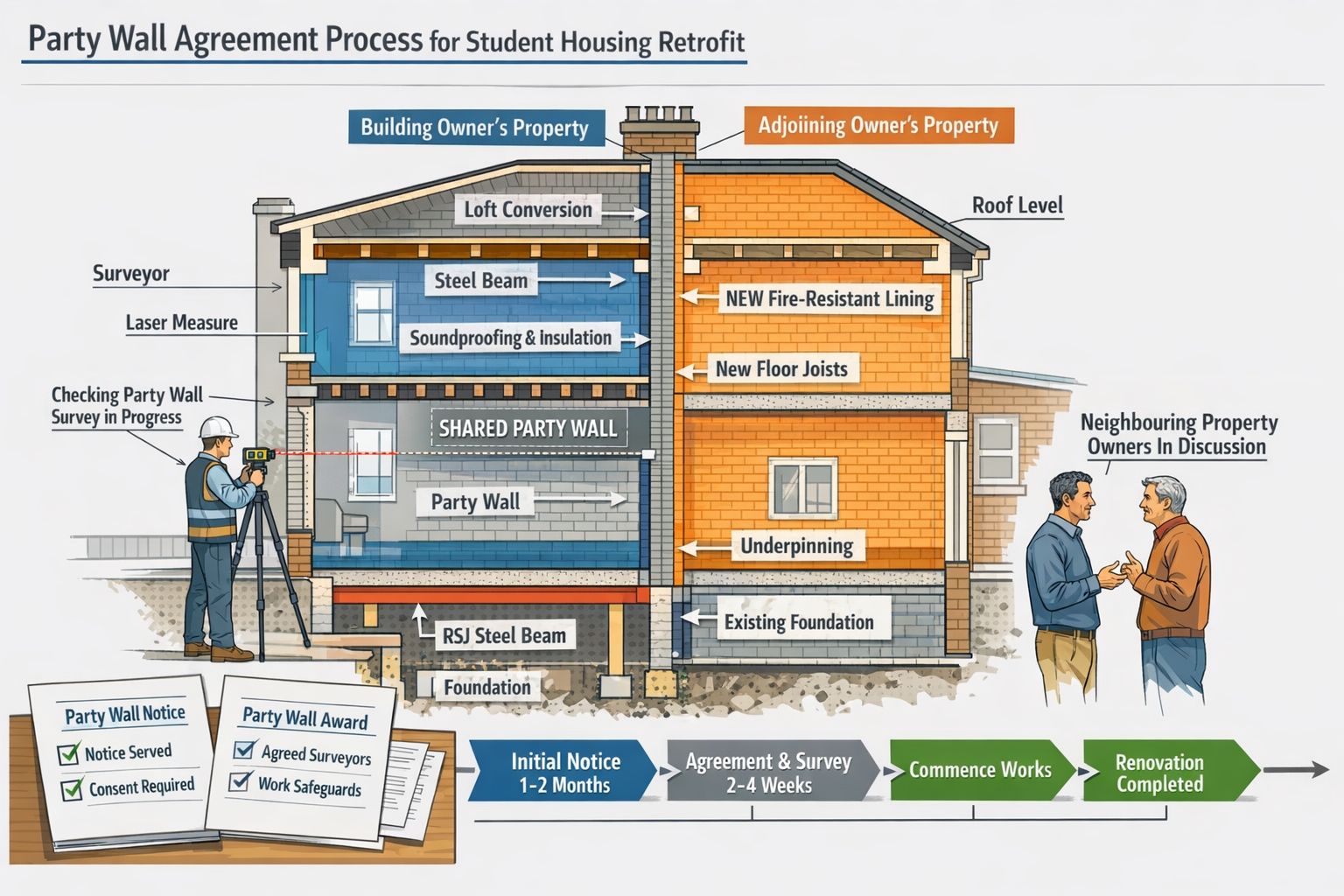
Vital Considerations For Celebration Wall Agreements The arrangement should also describe how the typical components can be made use of and maintained. It needs to describe who is responsible for regular maintenance and what takes place if one event causes damages. For example, general maintenance costs are normally shared equally, but if one proprietor creates damages via neglect-- such as from a water leakage or unapproved construction-- that owner may be responsible for the complete expense of fixing. A party wall is a common wall located on the building line in between two bordering buildings. It is utilized by both property owners for building or upkeep objectives. Usually, a celebration wall surface stands partly on each proprietor's land, but it can likewise be totally on one owner's residential property. To make units as enticing as feasible to potential tenants, many homeowner wish to renovate their rental areas. Besides, party wall surfaces usually provide structural assistance to the entire structure.
Preparing Celebration Wall Arrangements For Duplex Proprietors And Programmers
Exactly how essential is a party wall surface contract?
Yes, a party wall surface arrangement is required for an extension if it involves work on or near a shared wall surface with a neighbouring residential or commercial property. This agreement guarantees the defense of both parties and protects against prospective disputes.

The Procedure Of Obtaining An Event Wall Honor
- An Event Wall surface Arrangement, sometimes referred to as a Shared Facilities Contract or Common Wall Arrangement, is a lawfully binding agreement between homeowner who share an architectural element.Most notably, the arrangement needs to remain in composing in order to keep up the land.In other words, the goal of a Celebration Wall Surface Contract is to expect and solve disagreements in between parties prior to they ever happen.Understanding local regulations and building regulations is vital, as they regulate the construction and maintenance of these walls.In certain conditions, an owner may seek to tell an adjacent landowner from destroying or changing a celebration wall if they can show that permanent harm will be suffered as an outcome of the action.